 PE
Viking Treasure
Fleet
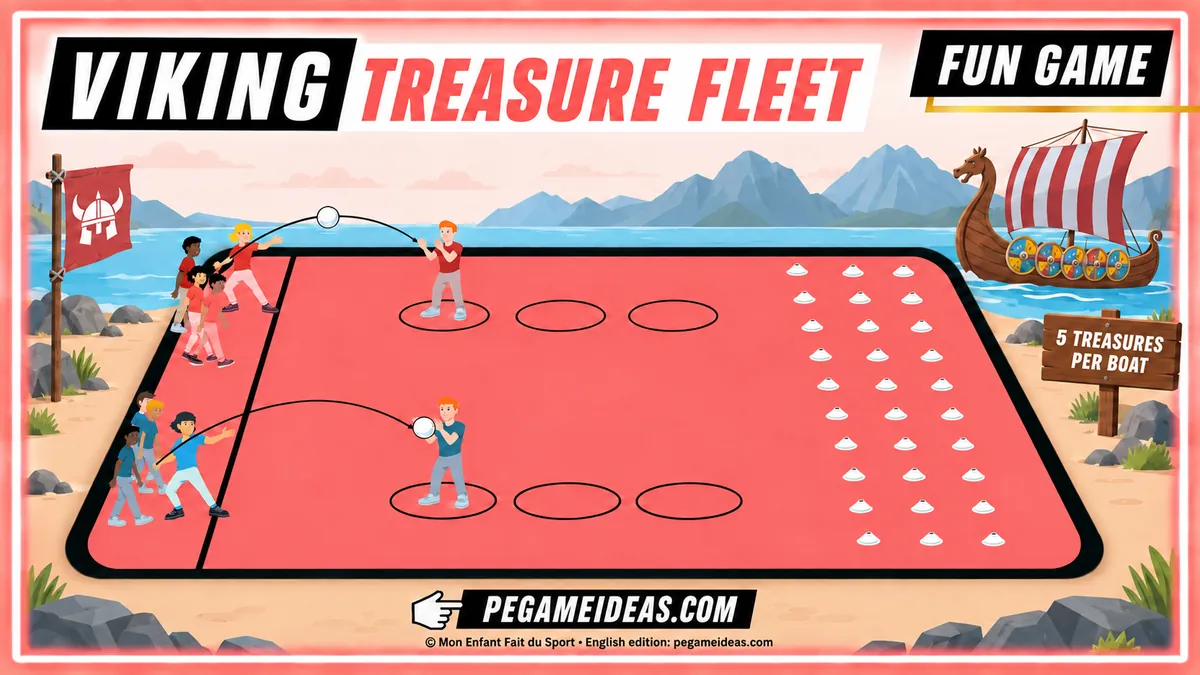
The Viking Treasure Fleet sends the teams on an expedition: to grab a treasure, a Viking first has to catch the ball thrown by a teammate, then rush it back to the longship. The first crew to fill its boats wins!
Click to watch the game in English, about two minutes.
Catch at your boat, collect a treasure and fill all three boats.
Setup & equipment
 The 35 Fun PE Games book, explained step by step and ready to print.Take a look
How to play, step by step
Reach the Active BoatThe first runner stands in the first empty boat. The next teammate throws the ball from behind the start line.
Catch to CollectAfter a clean catch, place the ball safely beside the boat, collect one treasure from the supply and put it in that boat.
Return the BallPick up the ball and bring it back to the start to hand over the turn. After a missed catch, retrieve the ball and return without a treasure.
Fill the FleetKeep taking turns. When the first boat has 5 treasures, aim for the second boat, then the third. Do not add more than 5 to a boat.
How to succeed
The first team to fill all 3 boats with 15 treasures wins. Allow about 10 minutes and finish the race.
Play smart
- One active collector per team.
- Keep the parked ball out of the running route.
- Use controlled passes and leave room between boats.
Skills kids work on
Each player
- Catching on the move
- Adjusted passes
- Running with an object
- Handling a miss
The group
- Working in pairs
- Organizing the line
- Counting together
- Cheering the thrower
Go further
Want every one of these fun PE games in one place?
Viking Treasure Fleet is in it, with the whole collection: 35 fun PE games, each on two pages, explained step by step and ready to print. Never short of an idea again.
Coach’s tip
The trap is the teammate's pass. The whole game depends on it, and if the thrower sends it too hard or too high, the partner can't catch and comes home empty-handed through no fault of their own. So I have kids throw with two hands at chest height, and I show it myself by playing in the first round. One demonstration beats three reminders.
The second habit: count the treasures out loud as they're dropped off. Five per ship sounds simple, yet in the middle of the race teams always get it wrong and argue over the final score. Having the child who drops it off call out the count solves the problem, and gives the runner something useful to do.
Xavier, state-certified youth sports instructor (BPJEPS, France)
You might also like
Frequently asked questions
What age is Viking Treasure Fleet for?
From 6. Catching a ball on the move is the real challenge: before that, kids trap it against themselves rather than with their hands, which works but slows everything down. From 4, replace the catch with a ball to pick up on the way; the rest of the game holds up as is.
How many players do you need?
At least six, three per team, so there's always a thrower, a runner and a player waiting. Six to twelve per team is comfortable. Beyond that, add a fourth ship rather than making the line longer.
What if kids almost never catch?
Move the thrower closer before changing anything else. Two yards closer and the success rate doubles, which gets the game going again immediately. If that's not enough, allow one bounce before the catch: it's much easier and nobody feels helped.
Can you play it indoors?
Indoors, foam balls and hoops laid flat against the far wall so they don't slide. Shorten the distance to the treasure, or kids run head down on a smooth floor holding an object, which is the best way to end up on the ground.
Official English edition of a game sheet by Xavier Baugé, the author of this game, first published in French on Mon Enfant Fait du Sport. Also available in Spanish.